Una McCormack - Infinite Diversity...
by John A. Wilcox
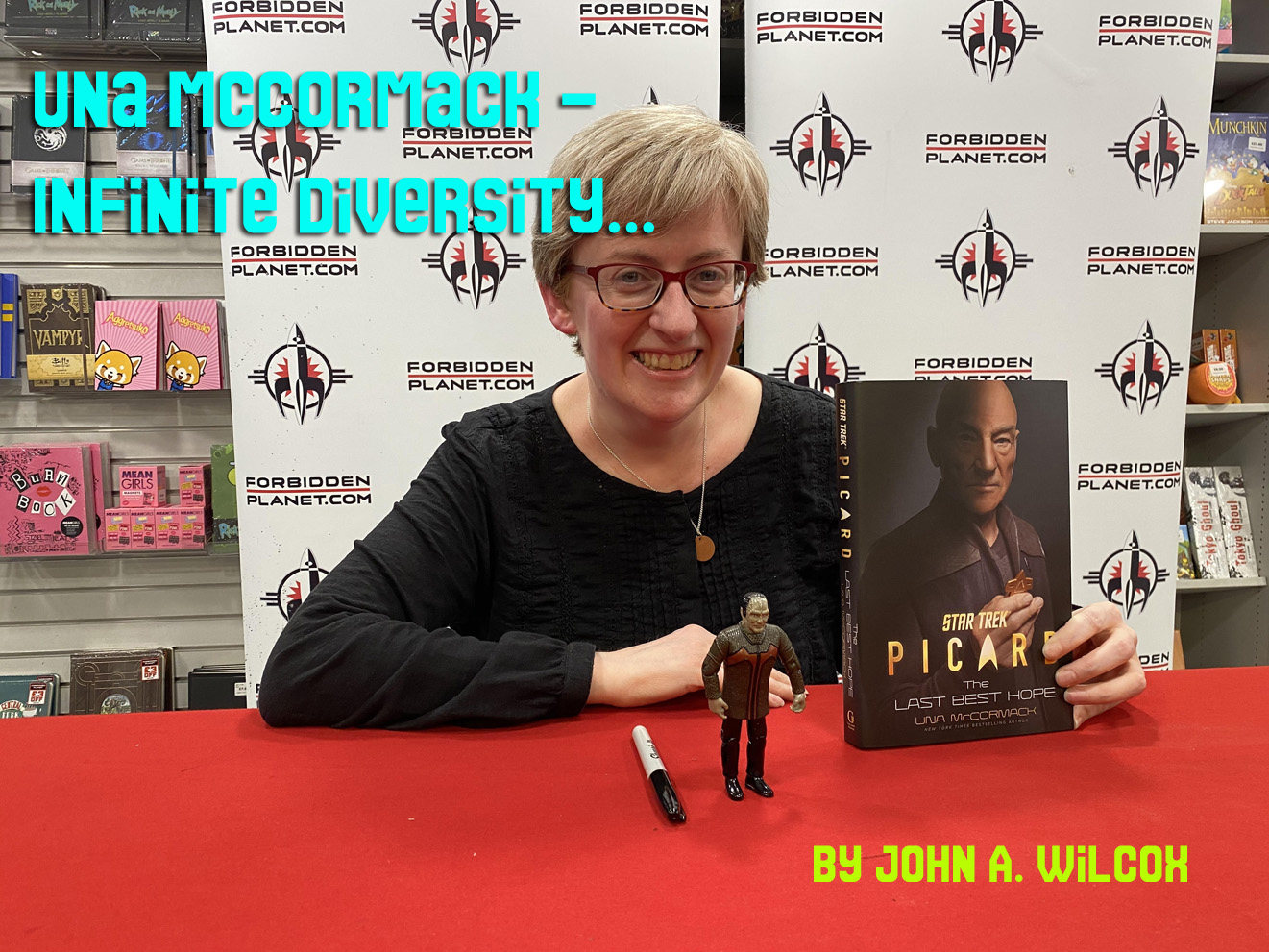
Una McCormack writes about the amazing worlds of Dr. Who, Blake's 7, Star Trek, as well as her own creations. I love her style, so I asked her to submit to a few questions. She was more than happy to, and here are the results!
PS: I understand you have just finished writing a new novel. Without giving any plot points away, what's it about and why will we all want to buy it the day it comes out?
UM: Jake Sisko goes to Cardassia Prime. Why would you not want to read that? It’s a murder mystery, set in the Cardassian desert, where Jake has to uncover secrets from the past, and come to terms with the apotheosis of his father. The Peacemakers
PS: What are the main similarities & differences between the Dr. Who & Trek universes?
UM: Star Trek is very bureaucratised, in many ways. You get regulations, and institutions, and admirals, and presidents, and ambassadors and so. It’s about negotiation, stable but progressive change. Doctor Who is anarchic in comparison. A mad(wo)man in a box turns up and accidentally overthrows the government. That’s how I feel they’re different, at least.
PS: What was the main springboard that led to you writing The Robot Revolution?
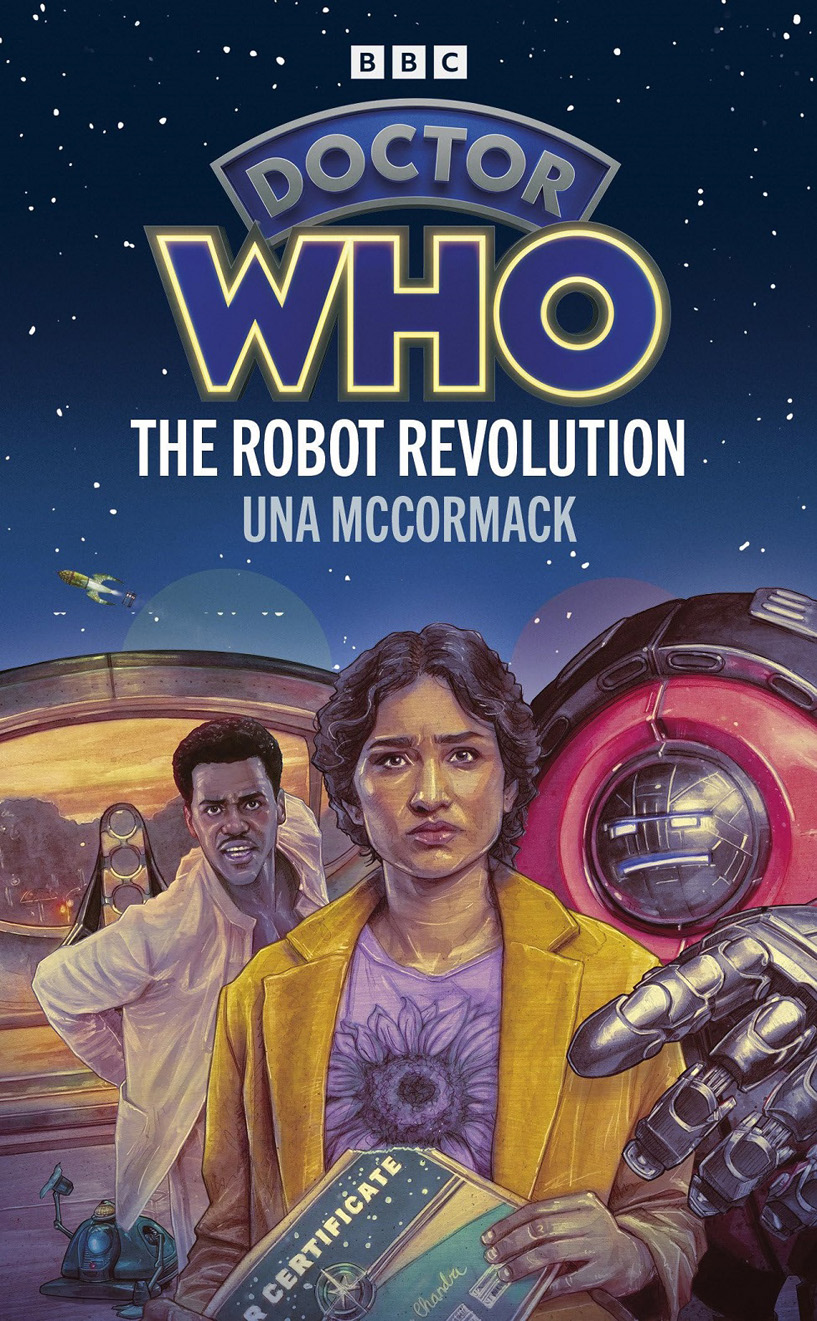
UM: The publishers emailed and asked if I wanted to do it! And I said yes, immediately. The Target novelisations were a staple of my childhood reading, and to be invited to do one was a massive honour. I had a great time with it, and I’m really pleased with how it came out.
PS: When writing Dr. Who stories, can you choose which iteration of the Doctor that you use?
UM: With the books, you’re generally commissioned to write something for the current Doctor. So my various novels go from the Eleventh to the Fifteenth Doctor. Big Finish audios might range more widely although, again, I’m generally approached by a producer who is working on a series involving a specific Doctor. I’m quite keen to tick off the set, though, so that’s a draw for me! I haven’t done anything involving the Third, Fourth, or Fifth Doctors yet. I’d like to fill that gap!
PS: I absolutely loved your portrayal of Sylvia Tilly in The Way To The Stars. What did you find in her that allowed you to dig so deep, emotionally?
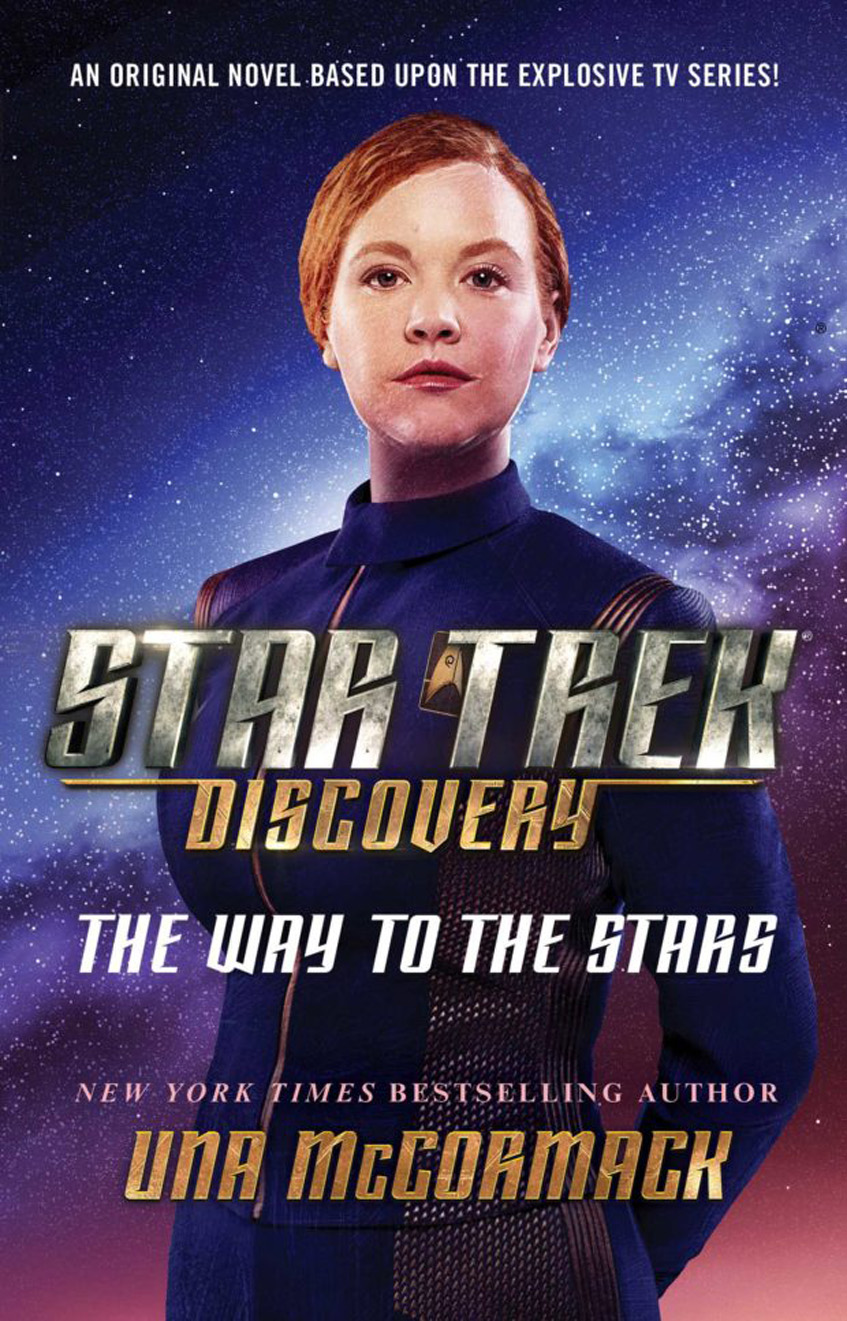
UM: The Way To The Stars is about Tilly as a teenager. I too was an awkward, geeky, always putting my foot in my mouth sixteen year old. I also loved science fiction (not a common interest at my all girls’ convent school in the 1980s) and I would have loved to have had a book like this when I was a kid. I was also very lucky, on this book, to work with the brilliant Kirsten Beyer. We had several lengthy conversations outlining the story, and it was all huge fun.
PS: When you are putting together a novel - Trek, Dr. Who, Blake's 7 - how do you decide which characters populate your stories?
UM: Either I’ve been asked to foreground a character by the editor. Otherwise, I pick characters whose voices I enjoy (Garak, Pulaski), or else haven’t been put together much (Odo and Bashir in Hollow Men, or Pulaski and Crusher in The Missing). The plot generally then throws up newly created characters who exist to represent various plot strands. They arise from context, e.g. you might need a senator or an academic or an undercover operative or a kid watching the TARDIS arrive or whatever it is that’s going on.
PS: Let's talk about about Deep Space Nine. Why do you visit that era & characters more than other eras?
UM: Cardassia, basically. When I watched DS9 for the first time back in the day, I was absolutely devastated by what happens to Cardassia at the end of the show. I wanted to explore and understand how what was manifestly a very sophisticated civilization was able to commit acts of barbarism like the Occupation and get into a death spiral that leads to its near-complete destruction. Garak is the individual character who perfectly dramatizes this. How does a manifestly intelligent and cultured man persuade himself to do these terrible things? All of this felt like thinking about history back in 1999. It just feels contemporary now.
PS: Give me some insight into Garak. What do you think makes him tick?
UM: Garak is a Cardassian patriot. It’s as straightforward as that. He wants what’s best for Cardassia. What has been interesting in the novels is to explore what might happen if Garak’s ideas of what that might mean change in the aftermath of his homeland’s near destruction at the end of the Dominion War. Garak also thinks that Julian Bashir is the most beautiful creature he’s ever seen, and he wants to sleep with him. That’s it, really – Cardassia, Bashir. Everything else is gravy. I mean, extremely elaborately prepared gravy that frequently tries to pass itself off as custard, but you get the point.
PS: Same question for Odo.
UM: Odo fears loss of control and so he pursues order. That’s why he becomes a policeman, and why he fears intimacy. Being the only liquid in a world of solids might make you that way.
PS: Which aspects of Gene Roddenberry's vision for Star Trek do you feel are the most essential?
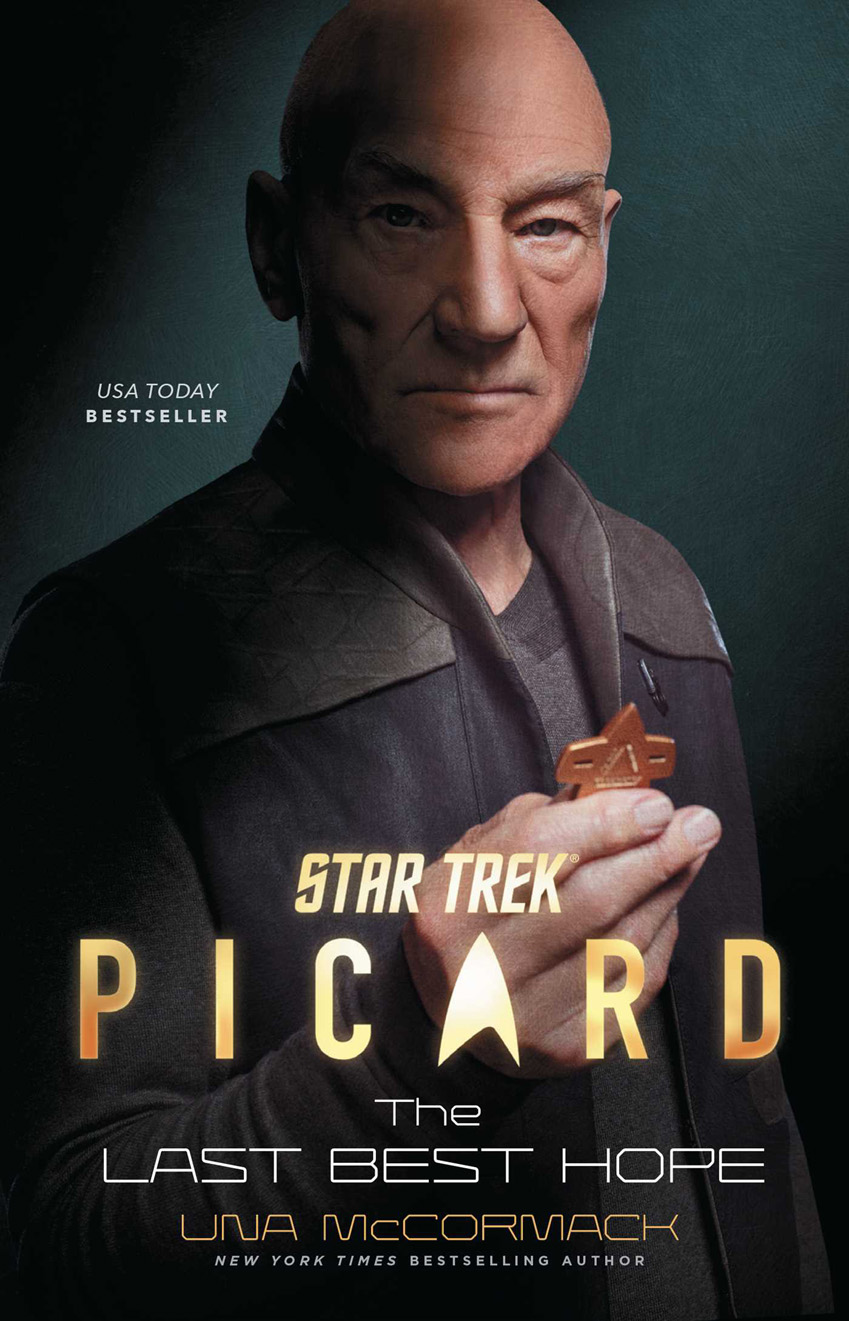
UM: In my book Picard: The Last Best Hope, I wrote a line that sums up Trek for me: ‘ingenuity plus hope equals change’. Using your intelligence, skill, wit, and imagination to build and create (which might mean technical or social systems) is the way we make things better. The hope is the hardest part, really. It’s easy to lose hope.
PS: What do you feel are the biggest differences between Pike and Kirk?
UM: Kirk, at least in TOS, lives in a universe that is opening up and full of opportunity and adventure. Pike lives in this same world but, because of his foreknowledge of where his life is heading, there’s a melancholy to Pike that Kirk doesn’t have.
PS: Have you seen Starfleet Academy yet? Has it inspired any thoughts for a novel from you?
UM: Yes, I’ve seen it and I love it! I always try to stay up-to-date on Star Trek as it’s coming out. I haven’t had any thoughts on a novel – I don’t tend to get ahead of myself. I prefer to be approached and asked to do a series and/or a character – that’s how the ideas start to spark.
PS: To the best of your knowledge, are the publishers interested in any more Discovery novels, or are they done for the present?
UM: You’ll have to ask them! Writers are always the last to know!
PS: Which episodes of Trek & Dr. Who inspired you most as a writer?
UM: In The Pale Moonlight is one of my favourite pieces of television. I watch it about once a month. It completely subverts Star Trek. Garak takes all the shibboleths of Starfleet and the Federation and puts a match to them. The whole episode is basically his slow corruption of Sisko. The first time I watched it, I couldn’t quite believe it existed. How lucky are we to have those two actors on screen delivering that to us? It’s amazing.
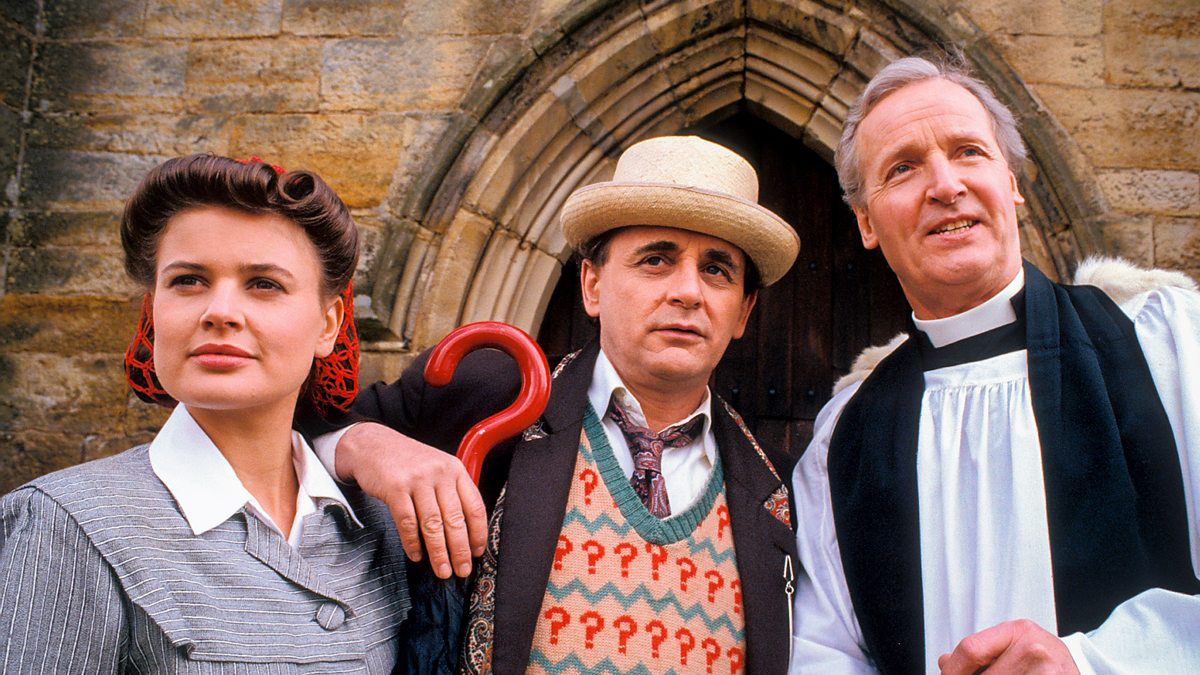
For Doctor Who, I adore The Curse Of Fenric (which I’ve written a short book about) and Gridlock (which I wrote a long essay about). I don’t know if they inspired me as a writer, as such, but they’re the episodes that I’ve spent the most time thinking about. They’re both so rich.
PS: How does Picard era Picard differ from TNG Picard, if at all?
UM: The Picard we know from TNG is a great man – a polymath, an explorer, a diplomat – all these things in the service of a great civilization. Picard era Picard, at least in the first season, is a man who has been completely disillusioned with his own society, and thus with his entire life and life’s work. It’s tragic to watch.
PS: Raffi is an interesting addition to the Trek universe. What do you enjoy about writing her?
UM: Raffi is frank, smart, wounded, and trying to get her life together it’s fallen apart. I love her because she’s loyal, unafraid, sometimes a little desperate, and she keeps on getting up and carrying on.
PS: Please tell me 6 books that had the greatest influence on you as a writer and as a person.
UM:
The Lord Of The Rings by JRR Tolkien is my favourite book, and I return to it for nourishment at least once a year.
The Dispossessed by Ursula Le Guin taught me about anarchism and how to structure a beautifully simple yet completely elegant novel.
Always Coming Home by Ursula Le Guin offered a philosophical, ethical and moral system in narrative form.
Lois McMaster Bujold’s Vorkosigan Saga taught me how to write scenes, pace, plot, character, and to build story over multiple books. There are about 30 of those, so I’m going to count those as the rest!
But I read eclectically, and a great deal. I taught creative writing for a long time, so almost every book I open I’m learning something fresh from it.
###
All photos are copyright their respective owners.
Table Of Contents
Contact